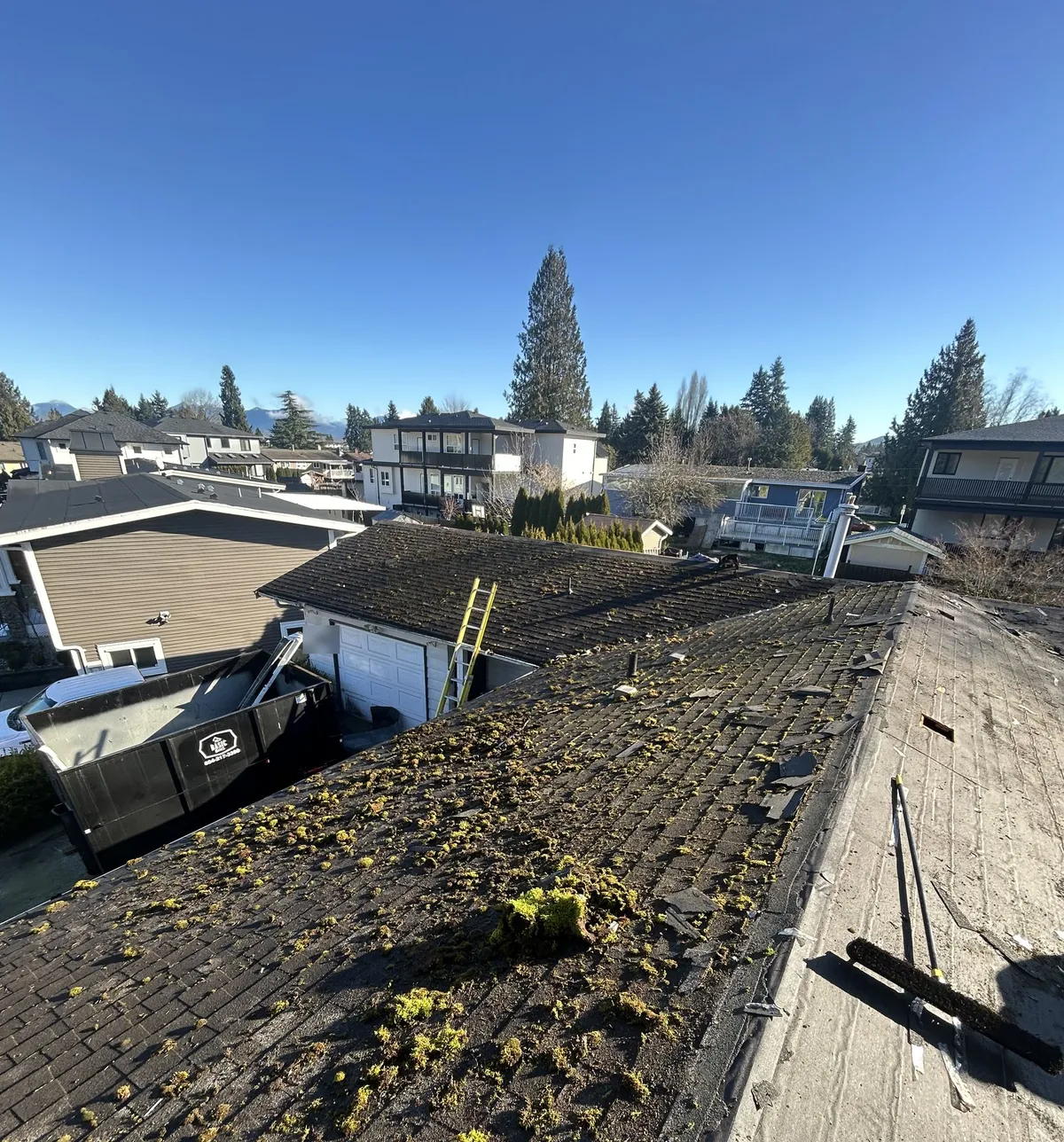
Moss can hold moisture on roof surfaces and collect near shingle edges. Have the roof assessed before cleaning, especially if the shingles already look worn.
Why Moss Grows
Damp, shaded areas often stay wet longer. Nearby trees and accumulated debris can contribute to those conditions.
What to Look For
- Retained moisture: Moss can keep the shingle surface damp.
- Lifted edges: Growth near laps can interfere with water shedding.
- Wet buildup: Assess accumulated material with the roof condition; do not infer structural damage from moss alone.
- Blocked gutters: Loose growth and debris can obstruct outlets.
- Appearance: Staining does not by itself tell you whether shingles need replacement.
Choose a Suitable Cleaning Method
Do not pressure-wash asphalt shingles. Ask for a method consistent with the shingle manufacturer’s instructions.
- Tree cover: Arrange safe trimming where branches shade or touch the roof.
- Moisture: Check roof drainage and attic conditions without assuming ventilation alone causes surface moss.
- Cleaning: Avoid scraping or methods that strip protective granules.
- Assessment: Start with a roofing consultation and request itemized options that fit your home and budget.
Cleaning cannot restore worn-out shingles. If deterioration is widespread, compare asphalt roof replacement first, then gutter work and any limited repairs.
← All articles