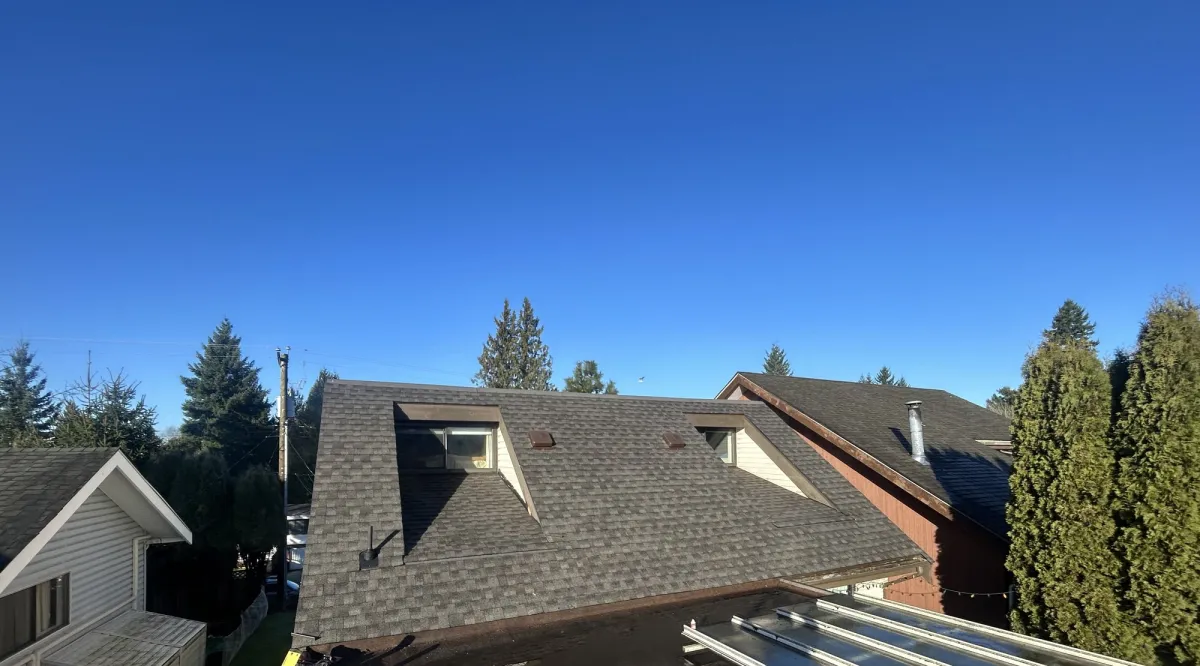
Living in British Columbia's Lower Mainland means dealing with plenty of rain, especially throughout the fall and winter months. If you're planning a roof replacement, you may wonder whether the work can go ahead during the rainy season or whether you need to wait until spring or summer.
The good news is that roofs can be replaced throughout the year, including during our wet winters. The important consideration is not simply whether rain is in the forecast, but how the roofing work is planned, how exposed areas are protected and whether conditions are suitable for installation.
At Homeguard Roofing, we understand that homeowners can become concerned when they see rain approaching while their roof is being replaced.
That's why we carefully plan our installations around the weather, work in manageable sections when necessary and use protective roofing materials designed to help keep water away from your home.
Can Roofers Work in the Rain?
Yes, certain roofing activities can be carried out during light or intermittent rain, depending on the work being performed, the roof conditions and the manufacturer's installation requirements.
However, there is an important difference between working during rainy weather and removing a roof during rainfall.
At Homeguard, we do not begin tearing off an unprotected section of roof while it is raining.
Instead, we look for suitable dry periods that allow us to remove the existing roofing, inspect and prepare the wooden roof decking, and install the necessary protective materials.
If the weather is unsettled, we can work on smaller sections rather than exposing the entire roof at once.
This approach allows us to make progress during the rainy season while reducing the risk of weather-related problems.
How Does Homeguard Protect Your Home During a Roof Replacement?
One of the most common questions homeowners ask is:
What happens if it starts raining after you've removed my old roof?
This is an understandable concern. After all, your roof is one of the most important parts of your home's protection against the weather.
Our installation process is planned to minimize the time your roof decking is exposed.
Step 1: We monitor the weather
Before beginning a roof replacement, we review the forecast and assess the conditions.
In the Lower Mainland, it is common to experience periods of dry weather between showers, even during winter.
These weather windows can allow roofing work to proceed safely and efficiently.
Step 2: We remove roofing in manageable sections
During unsettled weather, we do not unnecessarily expose the entire roof.
Instead, we can remove and prepare sections that can be adequately protected within the available weather window.
This reduces the amount of exposed decking and allows the crew to concentrate on getting each area protected.
Step 3: We inspect and prepare the roof decking
Once the old shingles and underlayment have been removed, we inspect the wooden roof decking for damage, deterioration or areas requiring replacement.
The decking must be suitably dry, clean and sound before the new roofing materials are installed.
Step 4: We install protective membranes and underlayment
Once the decking has been prepared, we install the appropriate protective roofing products.
Depending on the roofing system and the requirements of the project, these may include self-adhering peel-and-stick leak barriers, together with synthetic underlayments.
These materials help protect the roof decking from moisture while the shingles are being installed.
Step 5: We complete the shingle installation
Once the roof has been properly prepared and conditions meet the manufacturer's installation requirements, we proceed with installing the shingles.
If weather conditions become unsuitable, we protect the work and resume when it is appropriate to do so.
What Is Peel-and-Stick Roofing Membrane, and Why Is It Important?
Peel-and-stick roofing membrane is a self-adhering protective barrier installed directly onto a properly prepared roof deck.
Unlike conventional synthetic underlayment, which is mechanically fastened, peel-and-stick membrane adheres to the roof surface and provides additional protection against water intrusion.
Depending on the roof design and the system being installed, self-adhering membranes may also be used over larger areas of the roof.
When correctly installed, these products provide a highly water-resistant protective barrier, with some products designed to provide waterproofing beneath the finished roof covering.
This is particularly valuable during periods of unpredictable weather.
Can peel-and-stick membrane protect the roof for a couple of days?
Depending on the particular product, correct installation and weather conditions, a self-adhering leak barrier may provide temporary protection before the shingles are installed.
However, it is important to understand that not every peel-and-stick membrane is approved to function as a temporary roof.
At Homeguard, we follow the product manufacturer's exposure limitations and ensure that unfinished areas are suitably protected. We may also use additional temporary waterproof coverings when necessary.
The aim is always to get the permanent roofing system completed as soon as suitable conditions allow.
Can Shingles Be Installed During Light Rain?
This is where homeowners sometimes become concerned, particularly if they see a roofing crew working while there is a light shower.
The answer depends on the installation conditions.
Asphalt shingles are designed to withstand rain once properly installed. They are mechanically fastened to the roof decking using roofing nails.
They also have adhesive strips that help the shingles seal to one another, providing resistance to wind uplift and wind-driven rain.
The shingles are not glued to the underlayment. The nails secure them to the roof decking.
However, that does not mean the condition of the underlayment is unimportant.
Even though synthetic underlayments are designed to shed water, GAF's installation guidance calls for dry installation surfaces and recommends avoiding shingle installation over wet underlayment.
A brief passing shower is different from prolonged rainfall or saturated roof decking, but the crew must still assess whether the materials and working conditions are suitable.
At Homeguard, our aim is to install shingles during appropriate weather conditions. If light rain develops during an installation, we assess the condition of the roof surface, the weather and the work being carried out before deciding whether it is appropriate to continue.
We do not install roofing over saturated decking or knowingly trap significant moisture beneath a new roof.
What Happens If It Starts Raining Before the Shingles Are Finished?
Weather can change quickly in British Columbia.
Even with careful planning, a forecast dry period can sometimes be interrupted by an unexpected shower.
That does not automatically mean your home is at risk.
Once the roof decking has been covered with correctly installed protective materials, it has an additional layer of defence against moisture.
However, the level of protection depends on which materials have been installed, how they are detailed and whether there are unfinished roof penetrations, edges or junctions.
If rain begins unexpectedly, our crew assesses the situation and takes the necessary precautions.
This may involve securing temporary protection, completing safe weatherproofing measures or postponing the remaining installation until conditions improve.
The important point is that we plan ahead rather than relying on the weather to remain perfect throughout the day.
Can a Roof Be Replaced During Winter in British Columbia?
Absolutely.
Roofing installations can take place during the winter in Langley, Surrey, Abbotsford, Coquitlam, Port Coquitlam, Chilliwack and most areas in the Lower Mainland, including Delta and Richmond.
Our winters are generally milder than those experienced in many other parts of Canada, so suitable installation opportunities can occur throughout the season.
However, cold temperatures bring additional considerations.
For example, asphalt shingles contain adhesive sealing strips that generally activate through exposure to suitable temperatures and sunlight.
In colder weather, these strips may take longer to seal.
Depending on the product and conditions, additional hand-sealing procedures may be required by the manufacturer.
Snow, frost, ice, persistent rainfall and high winds may also make roofing work unsafe or unsuitable.
An experienced roofing contractor understands when to proceed and when it is better to postpone the installation.
Is It Better to Wait Until Summer to Replace Your Roof?
Not necessarily.
Although summer generally provides more predictable roofing conditions, waiting several months is not always the best choice.
If your existing roof has damaged, missing or deteriorating shingles, delaying replacement may allow additional moisture to enter.
Over time, this can damage roof decking, insulation, ceilings and other parts of your home.
A roof that is already showing signs of failure may not be in a suitable condition to withstand another wet winter.
The decision should be based on the condition of your roof, the urgency of replacement and the availability of suitable installation conditions.
A roof does not need to wait until summer simply because it is winter, but it does need to be installed correctly.
How Long Does a Roof Replacement Take, and What Happens If It Rains During Installation?
Many homeowners are surprised to learn how much work goes into replacing a roof. While some smaller, straightforward roofs can be completed quickly, most residential roof replacements involve several days of work, with many taking approximately a week and larger or more complicated roofs taking considerably longer.
Today's homes are often very different from the traditional, simple roof designs commonly seen years ago. Modern homes frequently have multiple roof planes, varying pitches, gables, dormers, valleys, skylights and complex roof intersections.
Each of these features requires additional preparation, precise cutting, careful flashing installation and attention to detail to ensure the entire roofing system works together correctly.
Replacing a roof is not simply a matter of removing old shingles and nailing down new ones. There are numerous components involved, all of which must be installed correctly to protect your home.
So what happens when your roof replacement takes a week or longer, particularly during the rainy season?
At Homeguard Roofing, we plan our installations around the weather and the complexity of each roof.
During unsettled weather, we work in manageable sections rather than unnecessarily exposing large areas of your home.
Once a section of the old roof has been removed, we inspect and prepare the decking before installing the appropriate protective membranes and underlayment.
Depending on the roofing system, this may include self-adhering peel-and-stick leak barriers and synthetic underlayments.
These materials provide additional protection while the roof replacement progresses, although unfinished areas must still be appropriately weatherproofed.
If rain is forecast or work needs to stop, we take the necessary steps to protect exposed areas until installation can safely continue.
A properly installed roof is an investment intended to protect your home for decades, and taking the necessary time to complete all the details correctly is far more important than rushing to finish in a day.
Our priority is to ensure your roof is installed correctly, with appropriate protection throughout the project, regardless of whether the installation takes several days, a week or longer.
Will Rain During My Roof Replacement Affect My Warranty?
Rain occurring during a roofing project does not automatically mean that the finished roof is defective or that the warranty is invalid.
What matters is whether the roofing system has been installed in accordance with the manufacturer's applicable requirements.
These include correct installation of the roof decking protection, leak barriers, shingles, fasteners, flashings and ventilation components.
At Homeguard, we are a GAF Master Elite® Contractor and offer eligible GAF roofing systems with manufacturer-backed warranty options.
We understand the importance of proper installation and following the requirements associated with the roofing system selected.
What Should Homeowners Expect During Installation?
We understand that having your roof replaced can feel disruptive, particularly when the weather is uncertain.
You may hear the crew working overhead, see sections of the old roofing being removed or notice protective membranes being installed before the shingles go on.
These are normal stages of the roofing process.
If the crew needs to stop because of the weather, it does not mean something has gone wrong.
It often means they are taking the appropriate precautions to protect your home and ensure the installation is completed correctly.
Homeowners should feel comfortable asking questions about the work and understanding how their property is being protected.
The Bottom Line: Don't Let the Rainy Season Stop You from Protecting Your Home
Roof replacements can be carried out throughout the year in British Columbia, including during our rainy fall and winter months.
The key is careful planning, experienced installers, appropriate protective materials and knowing when weather conditions are suitable.
At Homeguard Roofing, we do not unnecessarily expose an entire roof during unsettled weather. We plan our work around available dry periods, protect manageable sections as we go and follow the installation requirements for the roofing materials being used.
Our priority is not simply getting your new roof installed quickly. It is getting it installed correctly while protecting your home throughout the process.
If you're concerned about the condition of your roof or wondering whether you should wait until spring, contact Homeguard Roofing for a roofing consultation.
We can assess your roof, explain your options and help you decide on the best approach for your home.
← All articles